
If you can’t find the answer to your question below or in the FAQs then please contact us at support@kubify.co
Key information
GHGT-18 is using Kubify’s Learning Toolbox for the conference e-posters (also referred to as lightning talks).
Learning Toolbox allows you to create a collection of material (we call it a stack) that can be used to present and share your work during and after the conference.
Your GHGT e-poster stack can contain much more than just a presentation or poster file.
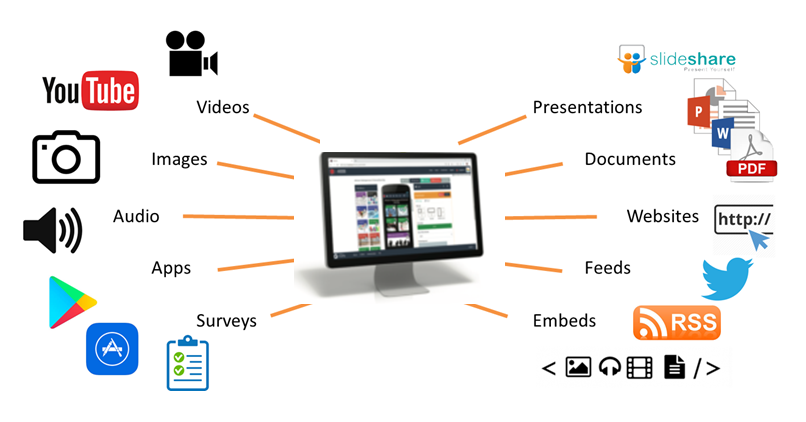
At the simplest level you can just add a presentation or traditional poster file (landscape orientation) to your e-poster stack, but the platform allows you to do much more. Learning Toolbox stacks can also contain additional materials such as videos, weblinks, papers and more. So you can include whatever material you have that helps people to understand and apply your work.
How will delegates engage with the e-posters onsite?
Delegates will be able to browse, search, view and interact with the e-posters stacks on their own devices (smartphones, tablets or laptops) and at the onsite e-poster stations.
There will be four key ways that delegates can access the e-poster stacks:
- through the showcase website
- at the summary poster walls
- on the onsite e-poster stations
- you will be able to share a link direct to your e-poster stack
The e-poster showcase website
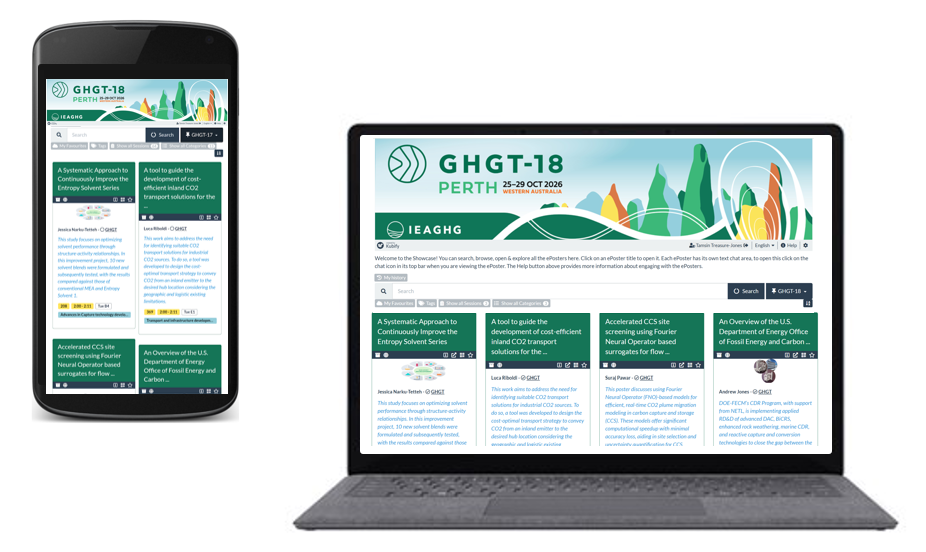
All of the e-poster stacks will be published to the e-poster showcase website. The conference team will let all delegates know how to access the showcase website. On the showcase website, delegates can browse, search, open and explore all of the GHGT-18 e-posters.
The summary poster walls
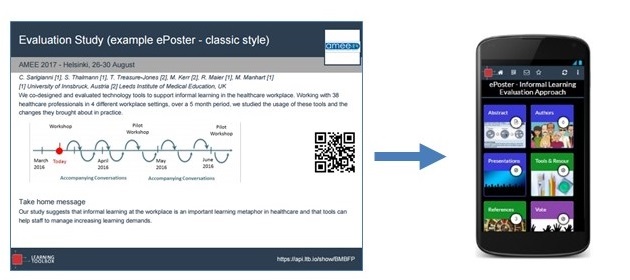
Learning Toolbox will make a summary poster for each e-poster (you choose the summary text and key image when you make your e-poster stack in Learning Toolbox).
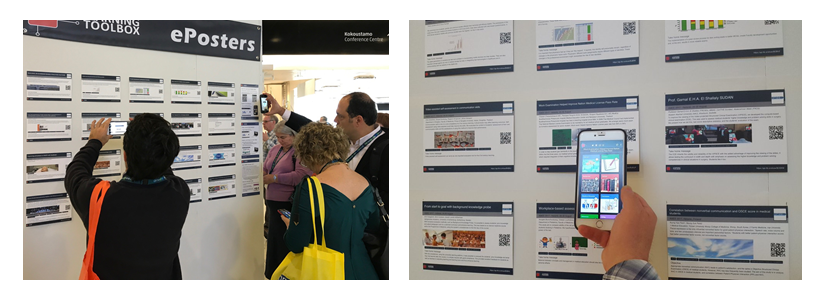
The conference team will print and display the summary posters onsite . You do not need to print or bring anything yourself.
By scanning the QR code on the summary poster delegates will be able to view and interact with your e-poster stack on their own phone.
The summary posters will help to promote your e-posters as well as providing an easy way to access and view them.
Onsite e-poster stations
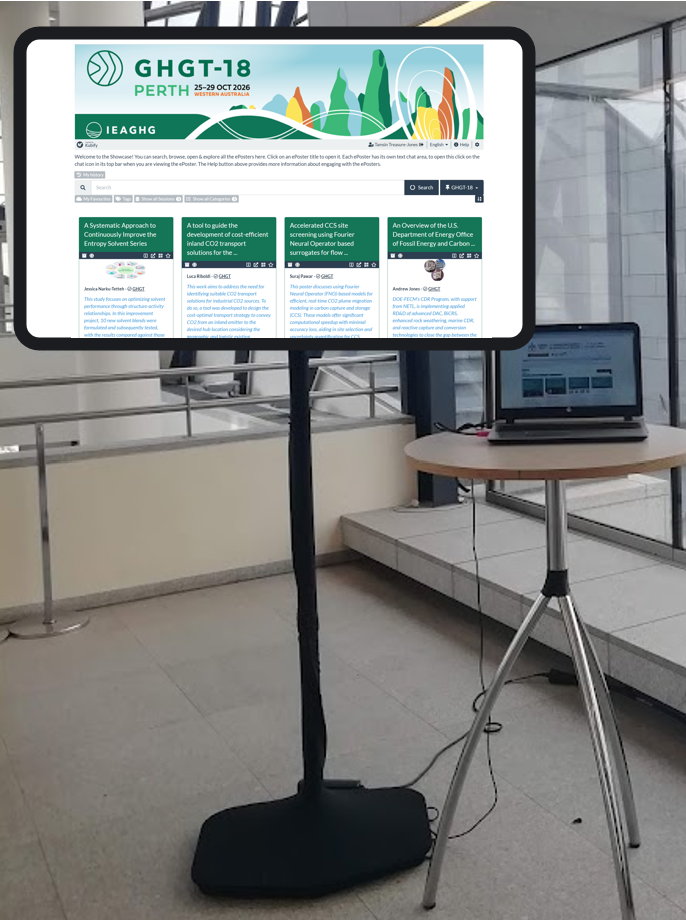
There will also be e-poster stations (internet connected screens) onsite from where delegates can browse the e-poster showcase and open and explore your e-poster stacks. These screens will be in standard landscape orientation. The e-poster stations will also be used for the e-poster presentations (lightning talks).
Directing people to your e-poster stack
It will be easy to direct people to your e-poster stack. Each e-poster stack has its own web link and QR code. You can send people the web link or show them the QR code. If they click on the link or scan the QR code then they will be taken directly to your e-poster stack. The aim is to make it easy for you to share your e-poster stack with others wherever you are.
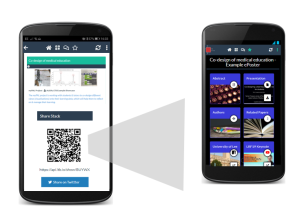
You will also be able to continue to use your e-poster stack to present and share your work after the conference. The e-poster stacks will remain hosted and available for at least the year of the conference.
Engaging with the e-posters – viewing, discussing, favouriting
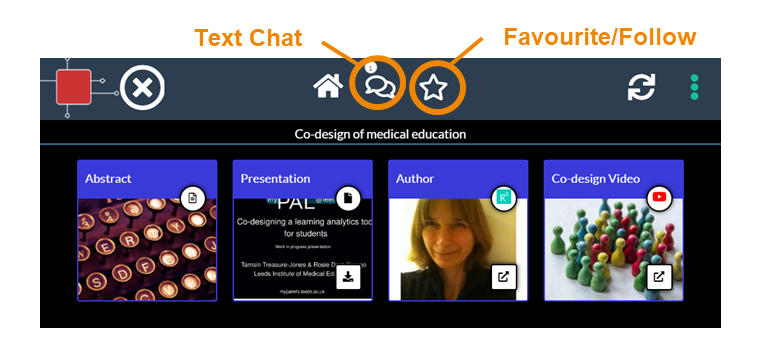
When delegates open your e-poster stack they can click on the tiles to view and interact with all the content you have added. They can also post questions or comments to your e-poster stack, to which you can respond. This text chat discussion will be attached to your e-poster stack and can continue after the event. You can opt to get email notifications of new chat on any e-poster stack including your own. Delegates can also favourite your e-poster stack so that they can return to it more easily.
Presenting your e-poster stack onsite (Lightning Talks)
Each e-poster author will be given a dedicated time onsite to present their work and engage with attendees, answering their questions directly.
These sessions will take place at the e-poster stations.
Closer to the conference we will let authors know the date and time they have been allocated, and at which e-poster station they will present.
The e-poster station will show the e-poster showcase and you will be able to open your e-poster stack and show any of the material that you have included in it.
The e-poster presentation slots will be short (10 minutes). The organisers recommend that you use just 3-5 minutes for the presentation and that you keep the reminder of the time free so that you can engage with the delegates and answer their questions directly.
Presentations will be grouped within at themed e-poster stations, allowing you to share your work alongside others in similar subject areas. Please use these times as a chance to meet and talk to other authors working in a similar area to you.
You are not limited to only showing your work during the scheduled presentation time. You can also bring delegates to any of the e-poster stations at other times throughout the conference, to show and discuss your work. Please do make use of the e-poster stations at any time that is convenient to you.
Delegates will also be able to explore and post questions on your e-poster stack throughout the conference, so there will be plenty of opportunity for engagement and discussion, both face-to-face and online.
Before the conference, you will already be able to check your e-poster on your own computer and practice your presentation using the preview button in Learning Toolbox.
What support will be available?
You will have plenty of support to use Learning Toolbox before and during the conference. There will be a webinar for authors on 22nd June, an email helpdesk (support@kubify.co) will be available to answer your e-poster questions in the run-up to the conference and there will be an onsite e-poster helpdesk at the conference if you have any last minute questions.
We will also send important reminders to you by email. Those emails will come from mail@ltb.io Please add this address to your email contact list to help avoid the emails going to your Spam folder
The following dates are important:
- 2nd June Invitation emails sent to e-poster authors from Learning Toolbox (mail@ltb.io)
- 22nd June at 8am (London, UK Time) – Webinar for authors.
- 22nd June at 5pm (London, UK Time) – Alternative webinar time for those unable to attend in the morning.
- 31st August – Deadline for presenters to register for the conference. Contact GHGT18@theeventgap.com.au if you have any conference registration questions.
- 30th September E-Poster DEADLINE – Finalise your stack in Learning Toolbox and mark it as ready to print and publish
Yes, it will be possible for you to continue to edit your e-poster stack after the 30th September deadline. We do not lock the e-posters even when they are published to the showcase. So you can always return to edit your e-poster stack as normal and the delegates will see the up-to-date saved version.
However, there are still some steps that do need to be completed by the 30th September. These are:
- Click on the invite link you have been previously sent and sign-in to Learning Toolbox
- Click on Create Stack
- Add the summary information to your e-poster stack. This should only take a few minutes as most people choose to use part of their abstract as the summary text and their organisational logo or some other illustrative image as their summary image. This FAQ shows where to add the summary information.
- Add sufficient content to your e-poster stack to make it worth viewing by the delegates (for example this could be your abstract, your presentation file and a link to your project or organisational webpage). It will be fine to add more content later, but we would like the stacks to have sufficient content by the 30th September so that we can then start publishing them to the showcase for delegates to view.
- Save your stack regularly and we recommend that you preview your stack as well.
You will still be able to return to edit your e-poster stack after it is published, so if you have some late additions or changes to make after the deadline date then that will be possible.
If you have not already watched the 4 minute video then we recommend watching this, as it gives a quick overview of how an e-poster stack is made in Kubify’s Learning Toolbox.
A live webinar was held on 22nd June. You can watch the recording of that webinar below. To see it in full-screen just click on the full screen icon at the end of the play bar. We have also included below the presentation slides that were used in the webinar.
Recording of the webinar
Presentation used in the webinar
The full paper submission is managed by IEAGHG. It is done outside Learning Toolbox and is done after the conference.
All presenters, whether giving oral or e-poster presentations (lightning talks), are required to submit a full paper for the conference proceedings. This is done after the conference.
You can find the information about full paper submissions here.
For any changes to titles and authors please email the GHGT-18 events team on events@ieaghg.org to ensure the correct information is included in the programme.
Presenting your e-poster stack (lightning talk)
All GHGT e-poster presentations will be onsite. The e-poster sessions will take place on Tuesday 27 and Wednesday 28 October from 2-4pm. The presentations will take place at the e-poster stations (which will each have a screen, keyboard and mouse).
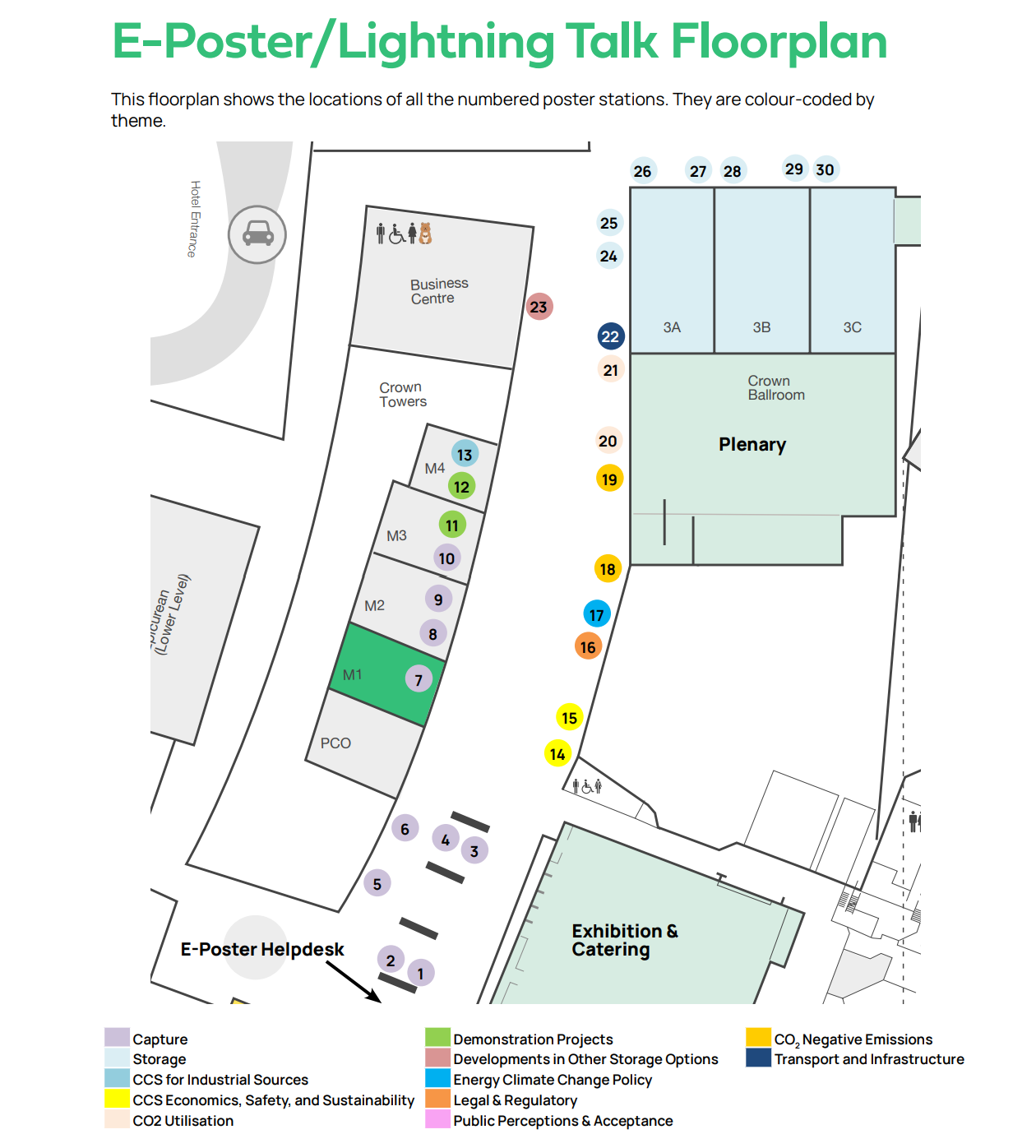
Each e-poster has a scheduled presentation slot. We emailed the editing author of each e-poster on 12th October with their presentation slot details (date, time, e-poster station number and session title). You can also now see this information in your e-poster’s summary view (the yellow and white tags). Here is a map of where the e-poster stations will be onsite. This also appears on page 9 in the printed programme.
The e-poster presentation slots will be short (10 minutes). The organisers recommend that you use just 3-5 minutes for the presentation and that you keep the reminder of the time free so that you can engage with the delegates and answer their questions directly.
The e-poster station will show the GHGT ePoster showcase and you will be able to open your e-poster stack and show any of the material that you have included in it. The screens will be in landscape orientation.
We strongly recommend that you practice presenting your e-poster stack so that you are familiar with how to open your stack and show the content that you want to include in your short presentation time. This guide explains how you can already practice your e-poster presentation from your own computer. Please note that if you have included a PowerPoint presentation file to use in your presentation then it will be in PDF format and so embedded videos or animations will not play. However, you can of course add the videos as separate tiles in your e-poster stack.
Presentations will be grouped at themed e-poster stations, allowing you to share your work alongside others in similar subject areas. Please use these times as a chance to meet and talk to other authors working in a similar area to you.
You are not limited to only showing your work during the scheduled presentation time. You can also bring delegates to any of the e-poster stations at other times throughout the conference, to show and discuss your work. Please do make use of the e-poster stations at any time that is convenient to you.
What support will be available?
If you have any questions about the e-poster presentations before the conference then just email us (support@kubify.co).
We will also have an onsite e-poster helpdesk at the conference if you have any last minute questions or if you want to check anything with us before your presentation.
We will also send important reminders (to the editing author of the e-poster) by email. Those emails will come from support@kubify.co or mail@ltb.io Please add these addresses to your email contact list to help avoid the emails going to your Spam folder
Creating your e-poster stack
Yes, it will be possible for you to continue to edit your e-poster stack after the 30th September deadline. We do not lock the e-posters even when they are published to the showcase. So you can always return to edit your e-poster stack as normal and the delegates will see the up-to-date saved version.
However, there are still some steps that do need to be completed by the 30th September. These are:
- Click on the invite link you have been previously sent and sign-in to Learning Toolbox
- Click on Create Stack
- Add the summary information to your e-poster stack. This should only take a few minutes as most people choose to use part of their abstract as the summary text and their organisational logo or some other illustrative image as their summary image. This FAQ shows where to add the summary information.
- Add sufficient content to your e-poster stack to make it worth viewing by the delegates (for example this could be your abstract, your presentation file and a link to your project or organisational webpage). It will be fine to add more content later, but we would like the stacks to have sufficient content by the 30th September so that we can then start publishing them to the showcase for delegates to view.
- Save your stack regularly and we recommend that you preview your stack as well.
You will still be able to return to edit your e-poster stack after it is published, so if you have some late additions or changes to make after the deadline date then that will be possible.
If you have not already watched the 4 minute video then we recommend watching this, as it gives a quick overview of how an e-poster stack is made in Kubify’s Learning Toolbox.
The full paper submission is managed by IEAGHG. It is done outside Learning Toolbox and is done after the conference.
All presenters, whether giving oral or e-poster presentations (lightning talks), are required to submit a full paper for the conference proceedings. This is done after the conference.
You can find the information about full paper submissions here.
For any changes to titles and authors please email the GHGT-18 events team on events@ieaghg.org to ensure the correct information is included in the programme.
GHGT-17 are using Kubify’s Learning Toolbox for the conference ePosters.
Your GHGT-17 ePoster can contain much more than just a presentation file.
Learning Toolbox allows you to create a collection of material (we call it a stack) that can be used to present and share your work during and after the conference. At the simplest level you can just add a presentation or poster file to your ePoster stack, but the platform allows you to do much more. Learning Toolbox stacks can also contain additional materials such as videos, weblinks, papers and more. So you can include whatever material you have that helps people to understand and apply your work.
How will delegates engage with the ePosters onsite?
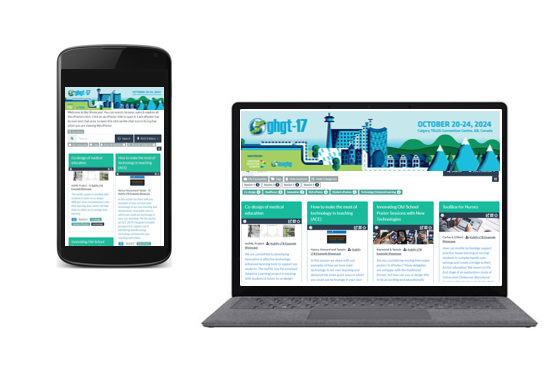
Delegates will be able to browse, search, view and interact with the ePosters stacks on their own devices (smartphones, tablets or laptops) and at the onsite ePoster screens.
There will be four key ways that delegates can access the ePoster stacks:
- through the showcase website
- at the summary poster walls
- on the onsite ePoster screens
- you will be able to share a link direct to your ePoster
The ePoster showcase website
All of the ePosters will be published to the ePoster showcase website. The conference team will let all delegates know how to access the showcase website. On the showcase website, delegates can browse, search, open and explore all of the GHGT-17 ePosters.
The summary poster walls
Learning Toolbox will make a summary poster for each ePoster (you choose the summary text and key image when you make your ePoster stack in Learning Toolbox).
By scanning the QR code on the summary poster delegates will be able to view and interact with your ePoster stack on their own phone.
The conference team will print and display the summary posters onsite . You do not need to print or bring anything yourself.
The summary posters will help to promote your ePosters as well as providing an easy way to access and view them.
Onsite ePoster screens
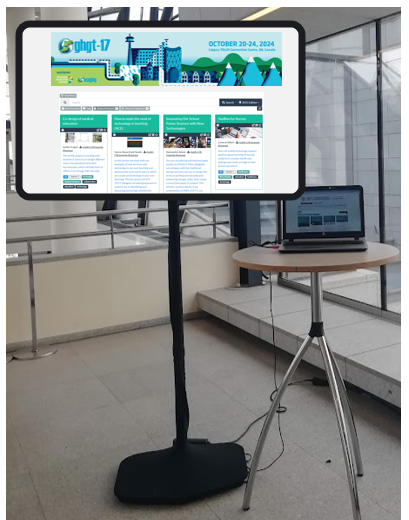
There will also be ePoster screens (internet connected screens) onsite from where delegates can browse the ePoster showcase and open and explore your ePosters. These screens will be in standard landscape orientation. These screens will also be used for the ePoster presentations.
Directing people to your ePoster
It will be easy to direct people to your ePoster. Each ePoster has its own web link and QR code. You can send people the web link or show them the QR code. If they click on the link or scan the QR code then they will be taken directly to your ePoster. The aim is to make it easy for you to share your ePoster with others wherever you are.
You will also be able to continue to use your ePoster to present and share your work after the conference. The ePosters will remain hosted and available for at least the year of the conference.
Engaging with the ePosters – viewing, discussing, favouriting
When delegates open your ePoster stack they can click on the tiles to view and interact with all the content you have added. They can also post questions or comments to your ePoster, to which you can respond. This text chat discussion will be attached to your ePoster and can continue after the event. You can opt to get email notifications of new chat on any ePoster including your own. Delegates can also favourite your ePoster so that they can return to it more easily.
Presenting your ePoster onsite
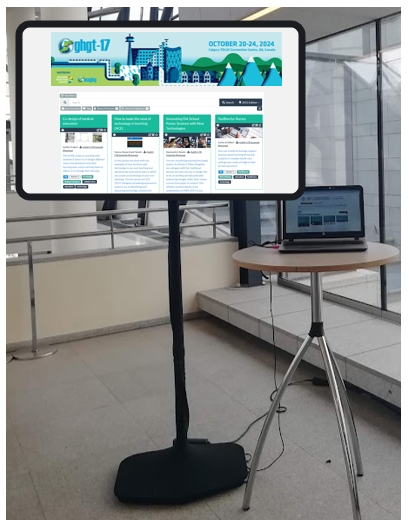
Poster presentation sessions will be held on Tuesday and Wednesday at the ePoster screens. Each author will have a scheduled presentation time. Closer to the conference we will let presenters know which day they are presenting on and at which screen.
The screen will show the ePoster showcase and you will be able to open your ePoster stack and show any of the material that you have included in it.
The ePoster presentations will be short (10 minutes), so aim to present only the key points of your work so that delegates can then discuss the details with you further at the end of the session. Delegates will also be able to explore and post questions on your ePoster throughout the conference, so there will be plenty of opportunity for engagement and discussion.
Before the conference, you will already be able to check your ePoster on your own computer and practice your presentation using the preview button in Learning Toolbox.
What support will be available?
You will have plenty of support to use Learning Toolbox before and during the conference. There will be a webinar for authors on 17th June, an email helpdesk (support@stack.services) will be available to answer your ePoster questions in the run-up to the conference and there will be an onsite ePoster helpdesk at the conference if you have any last minute questions.
We will also send important reminders to you by email. Those emails will come from support@stack.services or mail@ltb.io Please add these addresses to your email contact list to help avoid the emails going to your Spam folder
GHGT-18 is using Kubify’s Learning Toolbox for the conference e-posters (also referred to as lightning talks).
Learning Toolbox allows you to create a collection of material (we call it a stack) that can be used to present and share your work during and after the conference.
Your GHGT e-poster stack can contain much more than just a presentation or poster file.
At the simplest level you can just add a presentation or traditional poster file (landscape orientation) to your e-poster stack, but the platform allows you to do much more. Learning Toolbox stacks can also contain additional materials such as videos, weblinks, papers and more. So you can include whatever material you have that helps people to understand and apply your work.
How will delegates engage with the e-posters onsite?
Delegates will be able to browse, search, view and interact with the e-posters stacks on their own devices (smartphones, tablets or laptops) and at the onsite e-poster stations.
There will be four key ways that delegates can access the e-poster stacks:
- through the showcase website
- at the summary poster walls
- on the onsite e-poster stations
- you will be able to share a link direct to your e-poster stack
The e-poster showcase website
All of the e-poster stacks will be published to the e-poster showcase website. The conference team will let all delegates know how to access the showcase website. On the showcase website, delegates can browse, search, open and explore all of the GHGT-18 e-posters.
The summary poster walls
Learning Toolbox will make a summary poster for each e-poster (you choose the summary text and key image when you make your e-poster stack in Learning Toolbox).
The conference team will print and display the summary posters onsite . You do not need to print or bring anything yourself.
By scanning the QR code on the summary poster delegates will be able to view and interact with your e-poster stack on their own phone.
The summary posters will help to promote your e-posters as well as providing an easy way to access and view them.
Onsite e-poster stations
There will also be e-poster stations (internet connected screens) onsite from where delegates can browse the e-poster showcase and open and explore your e-poster stacks. These screens will be in standard landscape orientation. The e-poster stations will also be used for the e-poster presentations (lightning talks).
Directing people to your e-poster stack
It will be easy to direct people to your e-poster stack. Each e-poster stack has its own web link and QR code. You can send people the web link or show them the QR code. If they click on the link or scan the QR code then they will be taken directly to your e-poster stack. The aim is to make it easy for you to share your e-poster stack with others wherever you are.
You will also be able to continue to use your e-poster stack to present and share your work after the conference. The e-poster stacks will remain hosted and available for at least the year of the conference.
Engaging with the e-posters – viewing, discussing, favouriting
When delegates open your e-poster stack they can click on the tiles to view and interact with all the content you have added. They can also post questions or comments to your e-poster stack, to which you can respond. This text chat discussion will be attached to your e-poster stack and can continue after the event. You can opt to get email notifications of new chat on any e-poster stack including your own. Delegates can also favourite your e-poster stack so that they can return to it more easily.
Presenting your e-poster stack onsite (Lightning Talks)
Each e-poster author will be given a dedicated time onsite to present their work and engage with attendees, answering their questions directly.
These sessions will take place at the e-poster stations.
Closer to the conference we will let authors know the date and time they have been allocated, and at which e-poster station they will present.
The e-poster station will show the e-poster showcase and you will be able to open your e-poster stack and show any of the material that you have included in it.
The e-poster presentation slots will be short (10 minutes). The organisers recommend that you use just 3-5 minutes for the presentation and that you keep the reminder of the time free so that you can engage with the delegates and answer their questions directly.
Presentations will be grouped within at themed e-poster stations, allowing you to share your work alongside others in similar subject areas. Please use these times as a chance to meet and talk to other authors working in a similar area to you.
You are not limited to only showing your work during the scheduled presentation time. You can also bring delegates to any of the e-poster stations at other times throughout the conference, to show and discuss your work. Please do make use of the e-poster stations at any time that is convenient to you.
Delegates will also be able to explore and post questions on your e-poster stack throughout the conference, so there will be plenty of opportunity for engagement and discussion, both face-to-face and online.
Before the conference, you will already be able to check your e-poster on your own computer and practice your presentation using the preview button in Learning Toolbox.
What support will be available?
You will have plenty of support to use Learning Toolbox before and during the conference. There will be a webinar for authors on 22nd June, an email helpdesk (support@kubify.co) will be available to answer your e-poster questions in the run-up to the conference and there will be an onsite e-poster helpdesk at the conference if you have any last minute questions.
We will also send important reminders to you by email. Those emails will come from mail@ltb.io Please add this address to your email contact list to help avoid the emails going to your Spam folder
The following dates are important:
- 3rd June Invitation emails sent to ePoster authors from Learning Toolbox (mail@ltb.io)
- 17th June at 4:30pm (London, UK Time) – Webinar for authors.
- 24th June at 2pm (London, UK Time) – Alternative webinar date for those unable to attend on the 17th.
- 2nd September Conference registration deadline for speakers. It is important that you or your nominated presenter for your e-poster complete your conference registration by September 2nd to ensure inclusion in the programme.
- 1st October ePoster DEADLINE – Finalise your ePoster stack in Learning Toolbox and mark it as ready to print and publish
AFTER the conference – the IEAGHG team will ask all authors to upload a full paper of their work for publication in the proceedings. Find more information about this process here.
The following dates are important:
- 2nd June Invitation emails sent to e-poster authors from Learning Toolbox (mail@ltb.io)
- 22nd June at 8am (London, UK Time) – Webinar for authors.
- 22nd June at 5pm (London, UK Time) – Alternative webinar time for those unable to attend in the morning.
- 31st August – Deadline for presenters to register for the conference. Contact GHGT18@theeventgap.com.au if you have any conference registration questions.
- 30th September E-Poster DEADLINE – Finalise your stack in Learning Toolbox and mark it as ready to print and publish
All GHGT e-poster presentations will be onsite. The e-poster sessions will take place on Tuesday 27 and Wednesday 28 October from 2-4pm. The presentations will take place at the e-poster stations (which will each have a screen, keyboard and mouse).
Each e-poster has a scheduled presentation slot. We emailed the editing author of each e-poster on 12th October with their presentation slot details (date, time, e-poster station number and session title). You can also now see this information in your e-poster’s summary view (the yellow and white tags). Here is a map of where the e-poster stations will be onsite. This also appears on page 9 in the printed programme.
The e-poster presentation slots will be short (10 minutes). The organisers recommend that you use just 3-5 minutes for the presentation and that you keep the reminder of the time free so that you can engage with the delegates and answer their questions directly.
The e-poster station will show the GHGT ePoster showcase and you will be able to open your e-poster stack and show any of the material that you have included in it. The screens will be in landscape orientation.
We strongly recommend that you practice presenting your e-poster stack so that you are familiar with how to open your stack and show the content that you want to include in your short presentation time. This guide explains how you can already practice your e-poster presentation from your own computer. Please note that if you have included a PowerPoint presentation file to use in your presentation then it will be in PDF format and so embedded videos or animations will not play. However, you can of course add the videos as separate tiles in your e-poster stack.
Presentations will be grouped at themed e-poster stations, allowing you to share your work alongside others in similar subject areas. Please use these times as a chance to meet and talk to other authors working in a similar area to you.
You are not limited to only showing your work during the scheduled presentation time. You can also bring delegates to any of the e-poster stations at other times throughout the conference, to show and discuss your work. Please do make use of the e-poster stations at any time that is convenient to you.
What support will be available?
If you have any questions about the e-poster presentations before the conference then just email us (support@kubify.co).
We will also have an onsite e-poster helpdesk at the conference if you have any last minute questions or if you want to check anything with us before your presentation.
We will also send important reminders (to the editing author of the e-poster) by email. Those emails will come from support@kubify.co or mail@ltb.io Please add these addresses to your email contact list to help avoid the emails going to your Spam folder
When creating your e-poster stack, we ask you to also provide some summary information. You add this information in the Stack Summary area. This information is used in the summary view of your e-poster stack on the showcase and in your printed summary poster.
One of the pieces of information we ask for is a summary image.
Our recommendation would be to pick a simple image – since it is not going to be displayed in a large format.
If you take a look at the GHGT-17 ePoster showcase then you will be able to see what type of summary images people chose to add last time.
For what it is worth, here are a few from GHGT-17 that I think work well (each taking a slightly different approach).
Example 1
In the one below, they have created an image that uses all the logos of the organisations involved in the work. I think this works as it immediately gives the viewer the idea that this research was very collaborative and they are likely to be able to regonise some of these logos at a glance as well.
Example 2
I might be wrong about this one (my research area is learning technology not greenhouse gases or geology) but I think the image they have chosen for this one is likely to be meaningful to the researchers in this field. I am assuming that simply the type of graphic they are showing here gives you some indication of the type of work that is going to be reported in this e-poster. It is fits the space well and is bold and eye-catching.
Example 3
This one is much more abstract, but I think it does still tell us something about their research work (it’s related to water/brine) and again it is quite bold and eye-catching.
Example 4
Finally, this one has used the logo of the organisation behind the key technology that was used in the research. It gives an immediate message about what organisation/technology was involved in the work.
We will be holding a webinar for authors. You can choose to join either on Monday 22nd June at 8am (London, UK time) or on Monday 22nd June at 5pm (London, UK time). The same presentation will be given in both webinars, so just choose the time that suits you best.
During the webinar we will give a demo of an e-poster stack being made using Learning Toolbox and answer any questions you have about the e-posters at GHGT-18.
Here are the links to join the webinars:
Monday 22nd June Webinar at 8am (London, British Summer Time)
https://us06web.zoom.us/j/81616611134?pwd=crPq9abKX7jbai2ivjW1PRRgZJbHs4.1
Monday 22nd June Webinar at 5pm (London, British Summer Time)
https://us06web.zoom.us/j/87671800884?pwd=NT178qihDwabMCEmorwhxhQmZMvksI.1
The webinar will be recorded and the recording added to this Support Page. However, if possible, it is best to attend one of the webinars live, so that you can ask questions as well.
A live webinar was held on 22nd June. You can watch the recording of that webinar below. To see it in full-screen just click on the full screen icon at the end of the play bar. We have also included below the presentation slides that were used in the webinar.
Recording of the webinar
Presentation used in the webinar
Explore some inspiring e-posters from GHGT-17
To help inspire your approach, we encourage you to view some great e-posters from the GHGT-17 showcase. These examples demonstrate creative ways to utilize the software and may provide valuable ideas for your own presentation:
- GHGT-17 E-Poster Example 1
- GHGT-17 E-Poster Example 2
- GHGT-17 E-Poster Example 3
- GHGT-17 E-Poster Example 4
When creating your e-poster stack, we ask you to also provide some summary information. You add this information in the Stack Summary area. This information is used in the summary view of your e-poster stack on the showcase and in your printed summary poster.
One of the pieces of information we ask for is a summary image.
Our recommendation would be to pick a simple image – since it is not going to be displayed in a large format.
If you take a look at the GHGT-17 ePoster showcase then you will be able to see what type of summary images people chose to add last time.
For what it is worth, here are a few from GHGT-17 that I think work well (each taking a slightly different approach).
Example 1
In the one below, they have created an image that uses all the logos of the organisations involved in the work. I think this works as it immediately gives the viewer the idea that this research was very collaborative and they are likely to be able to regonise some of these logos at a glance as well.
Example 2
I might be wrong about this one (my research area is learning technology not greenhouse gases or geology) but I think the image they have chosen for this one is likely to be meaningful to the researchers in this field. I am assuming that simply the type of graphic they are showing here gives you some indication of the type of work that is going to be reported in this e-poster. It is fits the space well and is bold and eye-catching.
Example 3
This one is much more abstract, but I think it does still tell us something about their research work (it’s related to water/brine) and again it is quite bold and eye-catching.
Example 4
Finally, this one has used the logo of the organisation behind the key technology that was used in the research. It gives an immediate message about what organisation/technology was involved in the work.
Language: e-poster, lightning talk, stack
* Please note that WGC are using both the term e-poster / lightning talk to refer to one thing. The reason for the use of both terms is to emphasise that it is your choice whether to add a standard poster file, a presentation file or any other content to your stack to present at the conference. As you have been accepted to make an e-poster / lightning talk then you will use Kubify’s Learning Toolbox platform to create a stack and then add whatever content you want to include to present your work. Within these support pages we use the term e-poster stack or stack, to keep things concise, rather than writing out e-poster / lightning talk stack each time.
Frequently Asked Questions (FAQs)
You can find answers to more detailed questions on the FAQ page or by pressing the in-line help button (?) in the interface next to the item that you want to know more about.