
GHGT-18 is using Kubify’s Learning Toolbox for the conference e-posters (also referred to as lightning talks).
Learning Toolbox allows you to create a collection of material (we call it a stack) that can be used to present and share your work during and after the conference.
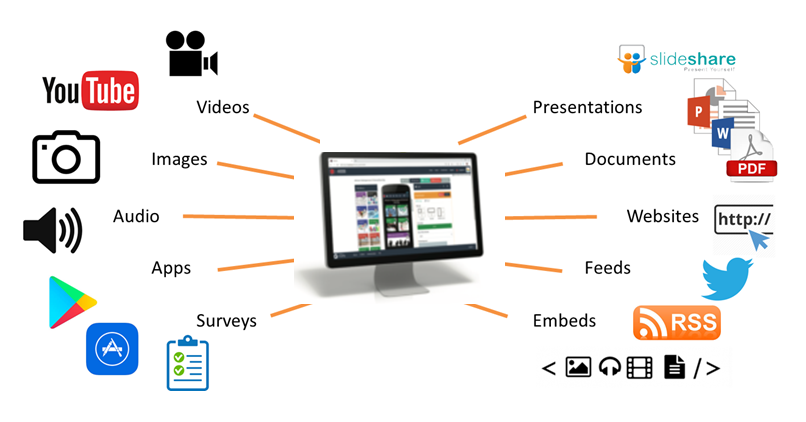
Your GHGT e-poster stack can contain much more than just a presentation or poster file.
At the simplest level you can just add a presentation or traditional poster file (landscape orientation) to your e-poster stack, but the platform allows you to do much more. Learning Toolbox stacks can also contain additional materials such as videos, weblinks, papers and more. So you can include whatever material you have that helps people to understand and apply your work.
How will delegates engage with the e-posters onsite?
Delegates will be able to browse, search, view and interact with the e-posters stacks on their own devices (smartphones, tablets or laptops) and at the onsite e-poster stations.
There will be four key ways that delegates can access the e-poster stacks:
- through the showcase website
- at the summary poster walls
- on the onsite e-poster stations
- you will be able to share a link direct to your e-poster stack
The e-poster showcase website
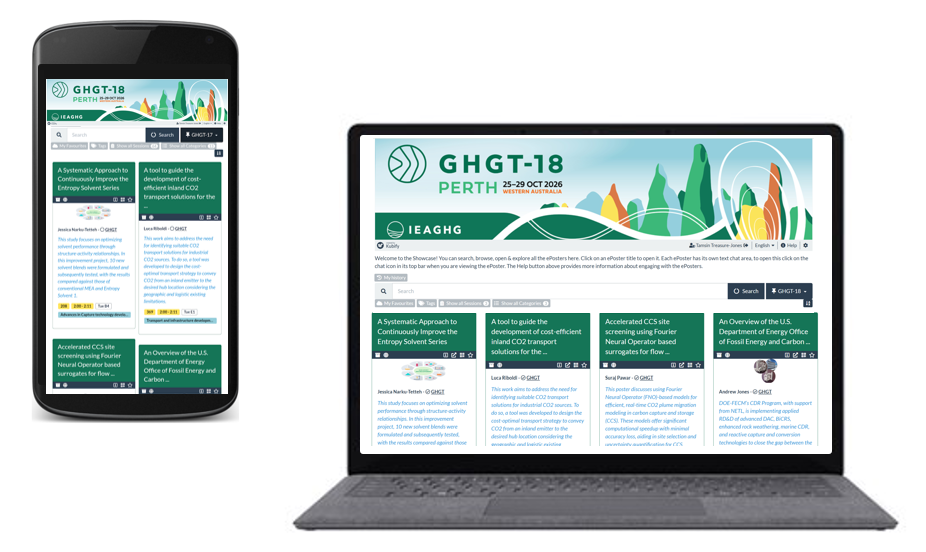
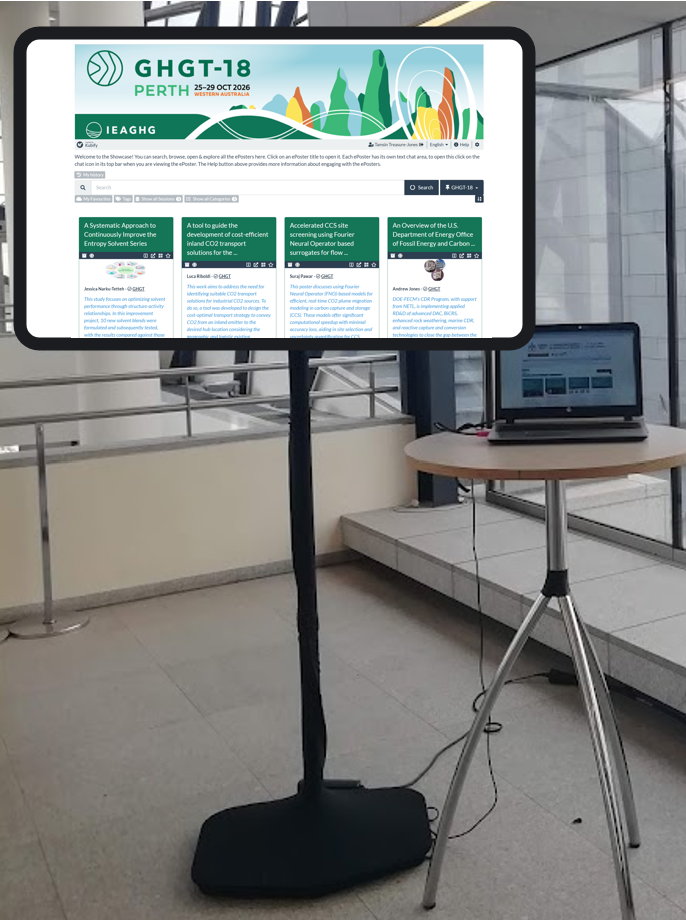
All of the e-poster stacks will be published to the e-poster showcase website. The conference team will let all delegates know how to access the showcase website. On the showcase website, delegates can browse, search, open and explore all of the GHGT-18 e-posters.
The summary poster walls
Learning Toolbox will make a summary poster for each e-poster (you choose the summary text and key image when you make your e-poster stack in Learning Toolbox).
The conference team will print and display the summary posters onsite . You do not need to print or bring anything yourself.
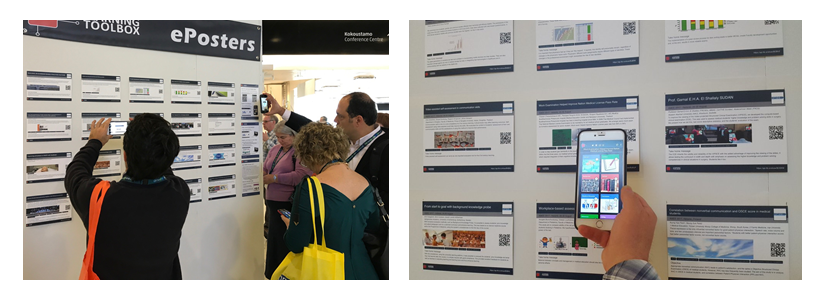
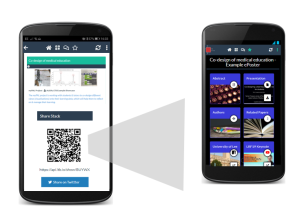
By scanning the QR code on the summary poster delegates will be able to view and interact with your e-poster stack on their own phone.
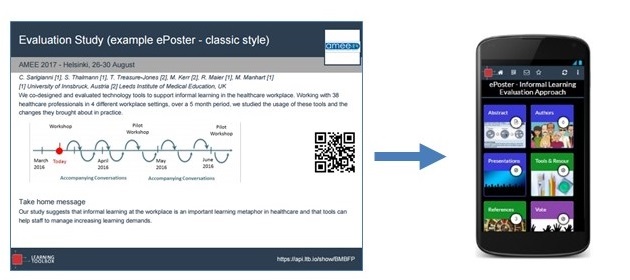
The summary posters will help to promote your e-posters as well as providing an easy way to access and view them.
Onsite e-poster stations
There will also be e-poster stations (internet connected screens) onsite from where delegates can browse the e-poster showcase and open and explore your e-poster stacks. These screens will be in standard landscape orientation. The e-poster stations will also be used for the e-poster presentations (lightning talks).
Directing people to your e-poster stack
It will be easy to direct people to your e-poster stack. Each e-poster stack has its own web link and QR code. You can send people the web link or show them the QR code. If they click on the link or scan the QR code then they will be taken directly to your e-poster stack. The aim is to make it easy for you to share your e-poster stack with others wherever you are.
You will also be able to continue to use your e-poster stack to present and share your work after the conference. The e-poster stacks will remain hosted and available for at least the year of the conference.
Engaging with the e-posters – viewing, discussing, favouriting
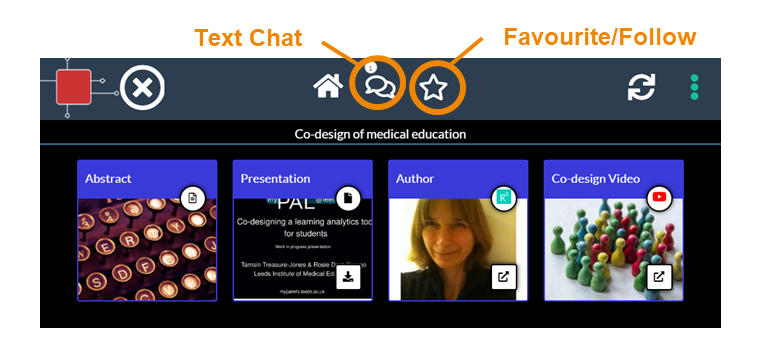
When delegates open your e-poster stack they can click on the tiles to view and interact with all the content you have added. They can also post questions or comments to your e-poster stack, to which you can respond. This text chat discussion will be attached to your e-poster stack and can continue after the event. You can opt to get email notifications of new chat on any e-poster stack including your own. Delegates can also favourite your e-poster stack so that they can return to it more easily.
Presenting your e-poster stack onsite (Lightning Talks)
Each e-poster author will be given a dedicated time onsite to present their work and engage with attendees, answering their questions directly.
These sessions will take place at the e-poster stations.
Closer to the conference we will let authors know the date and time they have been allocated, and at which e-poster station they will present.
The e-poster station will show the e-poster showcase and you will be able to open your e-poster stack and show any of the material that you have included in it.
The e-poster presentation slots will be short (10 minutes). The organisers recommend that you use just 3-5 minutes for the presentation and that you keep the reminder of the time free so that you can engage with the delegates and answer their questions directly.
Presentations will be grouped within at themed e-poster stations, allowing you to share your work alongside others in similar subject areas. Please use these times as a chance to meet and talk to other authors working in a similar area to you.
You are not limited to only showing your work during the scheduled presentation time. You can also bring delegates to any of the e-poster stations at other times throughout the conference, to show and discuss your work. Please do make use of the e-poster stations at any time that is convenient to you.
Delegates will also be able to explore and post questions on your e-poster stack throughout the conference, so there will be plenty of opportunity for engagement and discussion, both face-to-face and online.
Before the conference, you will already be able to check your e-poster on your own computer and practice your presentation using the preview button in Learning Toolbox.
What support will be available?
You will have plenty of support to use Learning Toolbox before and during the conference. There will be a webinar for authors on 22nd June, an email helpdesk (support@kubify.co) will be available to answer your e-poster questions in the run-up to the conference and there will be an onsite e-poster helpdesk at the conference if you have any last minute questions.
We will also send important reminders to you by email. Those emails will come from mail@ltb.io Please add this address to your email contact list to help avoid the emails going to your Spam folder